Essay
Why Is Starting Therapy So Hard?
Sometimes the hardest part isn't talking about what hurts. It's deciding to begin.
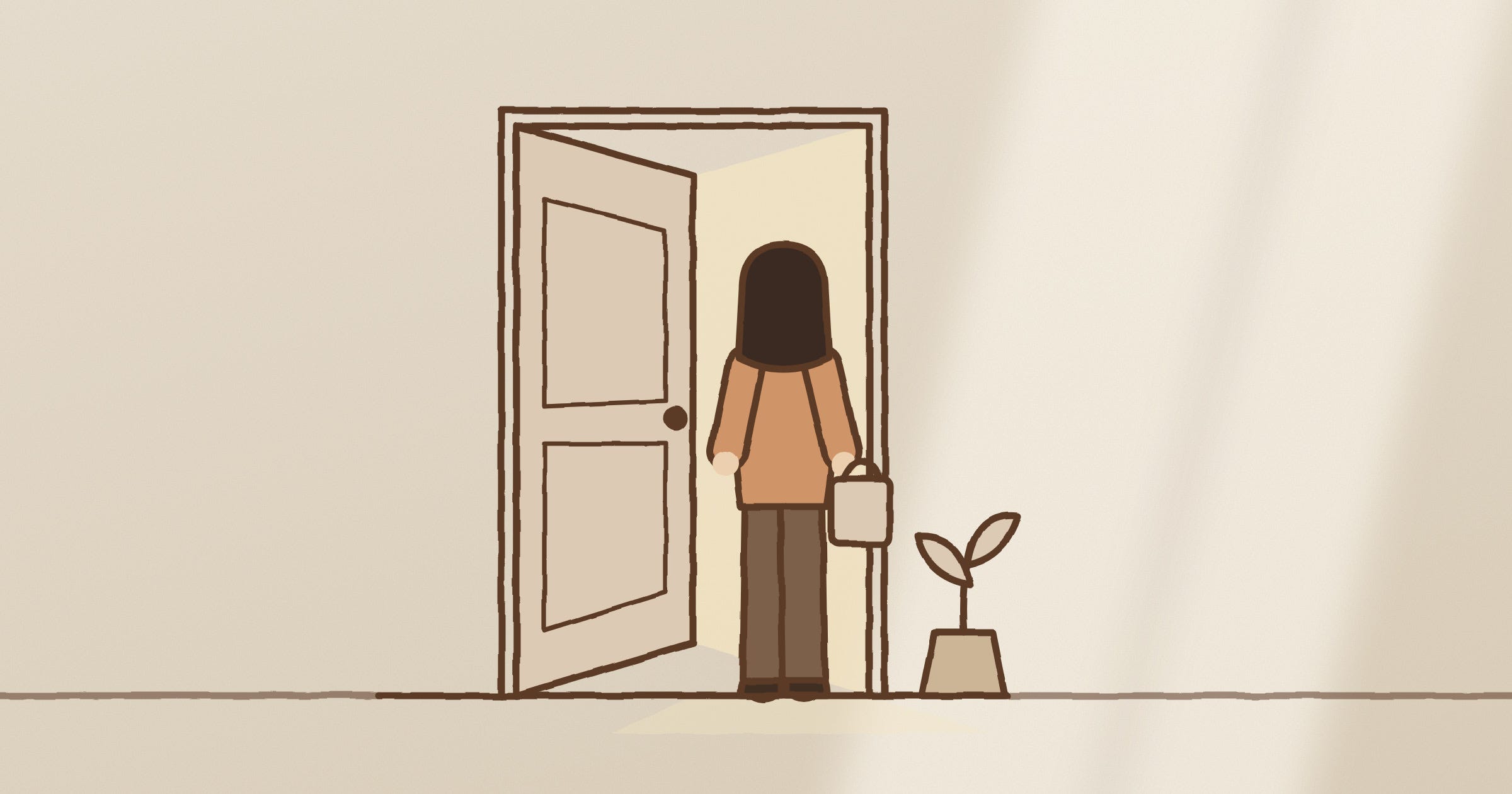
Ask people what they expect to be the hardest part of therapy, and many will say it is talking about painful things.
But for many people, the hardest part comes earlier. It is the first step: sending the message, booking the session, deciding that they are allowed to ask for help at all.
Imagine someone who has been thinking about therapy for months. They know something has felt heavy for a while. They have even found a therapist's website and read the page twice. And still, they don't send the message.
From the outside, the solution seems obvious: just book it.
But internally, the conversation may sound very different.
What will I say? What if it is not serious enough? What if I start talking and can't stop? Maybe I should wait until I feel more ready.
So they wait. And the longer they wait, the bigger the first step can start to feel.
Sometimes, what makes that step difficult is not simply the fear of talking to someone. It is the possibility of coming face to face with something we have spent a long time trying not to look at.
As long as we postpone the conversation, we can tell ourselves that perhaps things will improve on their own. Reaching out can mean acknowledging that something needs our attention, and that acknowledgment can feel surprisingly vulnerable.
What if I don't know what to say?
Many people worry about the first session before it has even happened. They imagine sitting across from a stranger and having to explain everything, clearly and in the right order.
But where do you begin when you don't fully understand what is happening yourself?
You don't need to arrive with a clear explanation. You don't need to know exactly what is wrong, or even what you want to change.
Part of therapy is figuring that out together.
When I meet someone for the first time, I don't expect them to have all the answers. I want to understand what they are experiencing, how it affects their everyday life, their relationships, their emotions, and the way they see themselves.
Sometimes, not knowing where to begin is itself a meaningful place to start.
What if I am judged?
There are parts of ourselves we find difficult to share, especially the thoughts, feelings, or behaviors we have already judged harshly within ourselves.
Sometimes, we fear that another person will see us in the same way we have learned to see ourselves.
We might worry about being misunderstood, appearing weak, or revealing something that changes how another person perceives us.
And when we have spent years trying to appear capable, independent, or in control, allowing someone to see our struggles can feel especially uncomfortable.
But therapy is not a place where you are expected to present the best version of yourself.
It is a space where we can become curious about the parts of ourselves we have struggled to understand.
What if it is not serious enough?
Some people wait because their problems don't seem big enough.
They compare their experiences to those of others and conclude that someone else probably needs help more.
Others have spent most of their lives managing things independently. Asking for support may feel unfamiliar, or even like admitting that they have failed at something they should have been able to handle alone.
But why do we sometimes believe that we have to reach a certain level of suffering before we are allowed to ask for help?
You don't need to be in crisis to talk to someone.
Therapy is not only for the moments when everything falls apart. Sometimes it is for the quieter things: feeling stuck, noticing the same patterns repeating in relationships, struggling to understand your reactions, or realizing that the way you have always coped is no longer helping you.
You don't need to prove that your pain is serious enough to deserve attention.
What actually happens in therapy?
Part of the hesitation around therapy comes from not knowing what to expect.
We hear that therapy involves talking, reflecting, and understanding ourselves. But what does that actually look like?
For me, therapy begins with curiosity.
We try to understand the patterns that shape how you think, feel, and respond to the world around you.
Sometimes, the way we react today is connected to experiences we thought we had already moved past. A situation that seems small from the outside might bring up an unexpectedly strong emotional response. A relationship might repeatedly leave us feeling rejected, anxious, or not good enough.
Rather than simply asking how to stop feeling that way, we explore what might be happening underneath.
Understanding these connections is not about remaining stuck in the past. It is about recognizing how our experiences may continue to influence the present.
But understanding alone does not always create change.
Therapy can also involve learning how to respond differently, whether that means recognizing emotional triggers, developing ways to regulate difficult emotions, setting boundaries, questioning deeply held beliefs about ourselves, or gradually approaching situations we have been avoiding.
And change rarely happens all at once.
Sometimes it begins with noticing a familiar reaction a little earlier. Pausing before responding in the same way. Recognizing that a thought is not necessarily a fact. Or allowing ourselves to make a different choice, even when the old one feels more familiar.
Over time, the goal is for these changes to become part of your everyday life.
Therapy should not make you dependent on the therapeutic space. It should help you build an understanding of yourself, and develop something that stays with you outside of it.
The first step is smaller than it looks
Perhaps one of the reasons starting therapy feels so overwhelming is that we imagine the entire process before we have even begun.
We think about everything we might have to talk about, everything we might discover, and all the changes we might eventually have to make.
But the first step doesn't require any of that.
It is not a promise to attend therapy every week for months. It is not a commitment to share everything about yourself with someone you have just met.
It can simply be one conversation.
A chance to ask questions, understand how the process works, and see whether the person sitting across from you feels like someone you could work with.
You are allowed to take your time. You are allowed to feel uncertain. And you are allowed to decide whether the process feels right for you.
So perhaps the more useful question isn't, "Am I ready?"
Maybe it's:
What would make the first step feel a little smaller?
Because being nervous does not mean you are not ready. And wanting to understand what is happening is reason enough to begin.
If you've been thinking about starting therapy but aren't quite sure where to begin, you're welcome to book a free introductory conversation. It's an opportunity to ask questions, talk about what brings you here, and see whether working together feels right.
Book a free consultation: https://www.dorentinapodrimqaku.com/